Sunday, July 18, 2010

Rental

Please note our Rental Policy has change:


  • Weekend rate starts at 4:00 p.m. on Friday and ends the following Monday at 11:00 a.m.

  • Pick-ups any time between 2:00 p.m. and 4:00 p.m. will be charged an additional half-day fee.

  • Any items picked up before 2:00 p.m. will be charge an additional full day.

TERMS AND CONDITIONS

FWC provides rental equipment as a service to the commercial photographic mark. It is assumed that the renter is proficient in the methods of photography, and lighting. Rental DO NOT includes training on equipment use or technique. Day rates are based on 24 hours. Weekend rates are billed at one-day rate when picked up between 4pm-6pm on Friday and returned by 11am Monday. For a full week rental you pay for a 4-day fee. A security deposit is required on all rentals. Insurance is the sole responsibility of the renter, and required. FWC inspects all equipment for damage upon return. Any damage or missing parts is the responsibility of the renter, and will be charged accordingly. For complete rental policy requirements, please ask for a copy. Rentals more than 4 days late with out notice, will be charged to the renter for the full price of the item(s) rented. A valid DL and Credit Card NOT Debit Card is required for all rentals. If you do not see something you may need, please call.

Our Supply of equipment available for rental is limited. We advise you to call and make your reservations today!


CAMERA BODIES


CANON


NIKON


LENSES


CANON FIXED FOCAL LENGTHS

CANON ZOOMS
NIKON FIXED FOCAL LENGTHS

NIKON ZOOMS


FLASHES AND EXTERNAL BATTERIES


TRIPODS


  • Bogen Tripod and Head . . . . . . . . . . . . . . . . . . . . . . .$15

  • Bogen Monopod . . . . . . . . . . . . . . . . . . . . . . . . . . . . .$5


LIGHTING


  • Elinchrome 400BX Set . . . . . . . . . . . . . . . . . . . . . . . . $50

  • PocketWizard Plus II Transceiver Set . . . . . . . . . . . . . .$15

STUDIO ACCESSORIES

  • 25lb Sand Bag . . . . . . . . . . . . . . . . . . . . . . . . . . . . . $5

  • 15lb Sand Bag. . . . . . . . . . . . . . . . . . . . . . . . . . . . . $5

  • 42in 5 in 1 Reflector Set . . . . . . . . . . . . . . . . . . . . . . $5

  • Background Stand Set (stands & Crossbar) . . . . . . . . . $15

  • 10x24 ft Backgrounds (Various Colors) . . . . . . . $25

DIGITAL PROJECTORS AND SCREENS


  • LCD Projector . . . . . . . . . . . . . . . . . . . . . . . . . . . . . .$100

  • 70x70 Dalite Projector Screen . . . . . . . .Free with Projector

Thursday, June 3, 2010

An Introduction to Aquatic Photography: Part I—Getting Scuba Certified


This summer we’re providing a three part series that will cover a number of aspects of underwater photography. Whether you just want to get better underwater shots of your kids in the pool, expand your abilities when snorkeling or become scuba certified in order to shoot fantastic tropical fish and reefs, we’ll explain how to make the most of every situation. In Part I, we’ll cover how to choose the right scuba instructor and dive shop in order to get certification, allowing you the opportunity to begin your underwater photography safari.

Scuba-diving is a sport that conjures up ideas of adventure and treasure-hunting. What many people don’t realize is that it’s also a sport that can be done regardless of being 21 or 61, and for those who’ve always wondered what it would be like to shoot underwater, getting scuba certified is an important required step in reaching that goal.

Scuba-diving can be a bit perplexing because, unlike other sports, there really isn’t a way to dabble in it to see if you like it. But there are ways to decide if this is something you’d like to pursue. If you’re intrigued or interested, here are a few tidbits to help you get started:

Find a Reputable Dive Shop: Get started by doing an online search to find a few dive shops or instructors in your area. Ask about the possible options for courses and the time and equipment commitment needed to get started. Also ask about their certification—the best-known associations are PADI (Professional Association of Diving Instructors) and NAUI (National Association of Underwater Instructors). Inquire about the qualifications of their instructors and about their safety record. And ask what kind of money-back guarantee they have in case an emergency comes up and you’re unable to go through with the entire course.

Don’t Be Shy: If you have any questions, please ask them. Many people who worry they may not be able to learn to scuba-dive are pleased to find once they begin that they’ve discovered a passion for a new sport. There are a few considerations to ponder. For example, if you’re age 40 or over, you’ll need to have a physical first to ensure good health, and those with specific respiratory issues such as asthma will need to first check with their primary physician before continuing.

Get a Buddy: Scuba-diving is considered a social sport and having a friend with you in the class can help in a number of ways. You’ll learn various skills that require two people and you’ll also need a dive buddy whenever you go out after certification, so why not find a friend to join you? If you’re unable to find someone to take the course with you, the instructor will pair you up with someone, giving you an opportunity to make a new friend or two!

Find the Right Fit: Your relationship with your scuba instructor is very important so make sure you find someone with whom you feel comfortable learning. If you find that you’re having trouble relating to an instructor, politely inquire about other classes or options. Professional instructors shouldn’t be offended as they understand that there are some situations where a different instructor is a better fit for a particular client.

It’s important to note that the quality of the photographs you shoot will depend largely upon your skills underwater and how well you handle issues of mastering neutral buoyancy and related diving skills. Once you’ve received your scuba certification, you’ll then be in a position to begin your underwater photography adventures and can even enroll in an underwater photography course.

Thursday, May 27, 2010

Could LED Lights Be Best for Your Needs?

If you’ve heard the term ‘LED light’ but aren’t sure what it really means or why you should consider using it in your photography, let us shed a little light on the situation!

LED stands for Light Emitting Diode. This particular kind of light is often used in other arenas, particularly in automotive lighting. Some recent technological developments have made this lighting source an excellent fit for photographic uses as LED lights can give off as much white light as other standard light sources.

LED lights are able to provide a uniform lighting source because the light is clustered in such a way to provide a streamlined beam of illumination. LEDs are very compact and there are no concerns of tubes or filaments breaking, which can greatly complicate a photo shoot. They’re also extremely energy efficient. Another bonus? Because LED lights don’t emit heat, there is little risk of this form of lighting causing or contributing to a fire. And they can save money because they last significantly longer than conventional lighting sources—up to 100 times as long!

When it comes to your photography, you’ll be able to achieve better natural-looking lighting by using a high quality LED light such as some models from our PROMASTER series. These lights are also the perfect accessory to use for your video projects. Here are a few choices to consider, and we have models which be used on-camera or as part of a studio lighting setup. www.fortwortcamera.com

Pick the Perfect Gear Bag


While many of us are guilty of tossing our digital cameras and equipment inside a large tote or backpack, deep down we know that we should be taking better care of our gear. The right bag provides a number of benefits including proper padding to absorb shock and to protect from bumps and drops, and keeping all your accessories and chargers in one place so they aren’t lost before your next trip. There are so many designs to choose from, and it can get a bit overwhelming at times, so let us help you narrow your focus. Here are a few tips to help you find the right gear bag for your needs:

Consider Your Gear: Take a quick mental inventory of your equipment. Do you use a point-and-shoot camera or do you switch between a point-and-shoot and your DSLR depending on the situation? How many lenses do you have? Are there accessories that you own that you often forget to bring with you such as filters, flashes or lens cleaner? How often will you need your laptop with you during a shoot or travel? Do you want to keep everything streamlined—including your laptop-- in one bag or do you have a laptop bag you already use for this purpose? Thinking about all your items as a group will help you get a better idea of which bags will make the cut.

Include Room to Grow: If you’re like many photo enthusiasts, you’ve got a wish list of accessories and other items you’d like to own one day. While there’s no reason to purchase a bag that far exceeds your current needs, ponder getting a slightly larger size if you are considering additional purchases of equipment this year.

What’s Your Style? It’s important to consider your preferences when choosing a bag. Some people find that a backpack style is the perfect design when needing to carry a substantial amount of gear comfortably while others prefer a messenger style designed to lay flat on the hip and that distributes weight off the shoulder. Still others would prefer something that blends into a work environment and looks more like a traditional briefcase.

How Will You Use Your Bag? Will your camera bag often be considered a carry-on for airline travel or do you need something capable of handling additional items when out hiking or outdoors? Do you need a smaller model that lets you travel light? Or, is it best to have a rolling hard case to help you navigate train and airport terminals?

When it comes to keeping your gear protected and organized, the right bag can make all the difference. We’ve got a number of different styles for you to consider ranging from small messengers to full-sized carryalls: www.fortworthcamera.com

Tuesday, April 6, 2010

April Showers Bring May Flowers…


While it’s true the month of April is known for the rain it brings, the wet weather is often an under appreciated opportunity to take pictures. While you certainly don’t want to be standing in the pouring rain with your best shooting gear exposed, that doesn’t mean you have to wait until everything is bone dry, either. If you can spot a body of water such as a pond river, you can capture reflections and rain patters forming on the surface. You may want to leave your shutter open for a bit longer in order to catching the falling raindrops. Once the rain has ended, opportunities to capture rain-kissed leaves, flowers and other subjects will be all around you. Just make sure to pack plastic bags and a towel or two to protect your equipment!

The Importance of Great eBay Photos:


The Importance of Great eBay Photos: Successful eBay sellers understand the importance of taking high quality photographs as a tool in closing the deal. If you’re currently selling online—whether as a way to turn some of your old things into cash or as a side business designed to bring in another stream of income, you’ll want to make sure your images demonstrate the value of the item you’re selling. Did you know that we can help you set up a table-top photo studio designed to help you get high quality pictures without breaking your budget or taking up a lot of space? We can also give you a few tips on how to best photograph reflective items such as jewelry, chrome or other challenging subjects. Just stop by our store so we can make sure you get just the right setup for your particular needs.

Quick Tips for Shooting Spring Sports


Spring has sprung and we are finally enjoying some warmer weather. It’s also time for spring sports, which means ample opportunities for getting great pictures. Here are a few tips to get you in the swing for spring:
Scout Your Spot Early: Figuring out where to stand is critical to getting the best shots because success means being in the right place at the right time. Try to get to the field a bit early to gauge which places are best for shooting the action as it unfolds. Is it possible to get a spot close to first base? Are there items that could obstruct your view? As you start shooting in this environment, you’ll get a feel for the best places to stand, and once you’ve got that down, you should be set for the entire season.
Getting Around the Fence: How many times has the fence proved a formidable opponent to your getting that perfect shot of your child sliding into home plate? Again, a little bit of planning can make all the difference. Play with various locations close to the fence to see if there is a particular angle that will allow you to shoot in the clear. You may also want to consider a monopod for these events as they can be a great asset in helping you shoot from a higher angle, which will not only allow you to secure the shot but also to create images from a new and interesting perspective. Want to learn more about our monopods?
Candid Camaraderie: Sometimes we’re so focused on the action that we forget about those wonderful moments of playful connection and camaraderie between teammates. Keep your eyes open for those high-fives and pats-on-the-back. These moments represent the heart of team sports and lend another dimension to our sports photography library

Wednesday, March 24, 2010

Scott Smith Lighting Seminar

September 10 - 12, 2010
November 12 - 14, 2010

Master of Photography, Scott Smith, will be training photographers to see the light in plain, easy to understand terms. No matter your experience, Scott will teach you how to take control of your lights and how to pose for better portraits. Visit his website for more information.


1-800-853-1190


Tuesday, March 2, 2010

Photographing Pets

For many people, pets are an important part of the family.  They provide companionship, affection, protection and a healthy dose of laughter.  However, capturing your pet’s personality—or even getting him to sit still—can be a real challenge, but with a few tricks up your sleeve, you’ll find that photo that truly captures your furry friend’s fun disposition. 

Keep it Natural:  When it comes to lighting, try to shoot using available light even if you’re indoors.  Perhaps you can use the light coming in from a nearby window.  If possible, forgo using your camera’s flash.  In addition to possibly startling your pet and hindering his cooperation, the flash can also keep you from capturing your pet’s coat color accurately. However, if your pet has an all-black coat, a flash or direct outdoor sunlight can be an advantage because it will help bring out subtle shadings and variations that make your pet unique.

Follow Your Pet:  When it comes to posing your pet, it’s best to meet him where he is at that moment.  If he’s resting, consider taking a few shots from a distance first.  Move in slowly and deliberately.

Frame Shots Tight:  When it comes to taking pictures of pets, a great zoom lens can work wonders. Whenever possible, fill the frame with your shot and shoot a bit tighter than you’re used to as it will create a more intimate and personal pet portrait.  If you’re looking for a new lens, we have a number of PROMASTER models designed to deliver high quality at a competitive price:  http://www.promaster.com/digital

Include Your Kids:  If you have children, this is a wonderful family project and a great way to spend time after school one afternoon.   Enlist your child to help with posing and using toys or other enticements to get your pet to look in a certain direction or to create an ‘action’ shot of him retrieving a toy.  You can capture some great interaction between your kids and your pet; just let the events unfold and shoot away.  Trying to control the interaction may end up stifling the images and losing the lightness you’d hoped to capture.

Let it Go:  Photographing pets can be challenging at times, and if your pet isn’t cooperating, put the camera away and try another time.  After a nice long walk or a game of catch, your pet may feel more cooperative and you can try again.

Monday, March 1, 2010

Spring Break Photography Tips

You can almost hear the squeals of glee coming from kids and adults alike when Spring Break arrives.  After plodding through winter weather, school, work and family commitments, the promise of a few days of freedom is enough to boost anyone’s spirits.  If you’re one of those lucky souls with a getaway planned during Spring Break week, here are a few tips to help you prepare to return with some fantastic photographs:

Pack the Right Gear:  Make sure you’ve got the right equipment for your trip.  If you want to travel light, you may find it best to choose your compact camera in lieu of your DSLR; however, if your destination includes some amazing scenery and landscapes, you may find it’s well worth taking your DSLR to ensure you are prepared to capture the grandeur of your location.  And remember to pack the battery charger, a lens cleaning cloth and an extra memory card.  It will only take a few minutes to properly prepare and it will be time very well spent.  If you need to pick up a memory card for your trip, we carry some of the best on the market:  http://www.promaster.com/memory

See the Signs:  While on your travels, make sure to photograph any interesting signs that display the uniqueness for your location.  Clever street names, signs displaying unusual warnings (Javalina crossings, anyone?) and mile markers can add a very local and interesting element to your vacation library of photographs. 

Define the Essence:  Each location has its own personality, its own attributes and distinctive markers.  While on vacation, think about what words you’d use to describe your vacation spot.  Having that clarity will help you with your storytelling and assist in identifying those sights that articulate your vision.

A New Twist on Famous Landmarks:   If you’re traveling to a well-known landmark, park or destination, take the opportunity to photograph it in a new and interesting way.  Look at corresponding architecture, foliage and surroundings to see how to take a familiar sight and uncover a new way of viewing it.  Experiment with zoom, distance, angle and lighting to unearth an interesting new perspective.  

Thursday, February 4, 2010

Why a Photography Hobby is Good for Women’s Health

Today’s women find themselves with more tasks than time and juggling multiple roles that each have a long to-do list attached. For those ladies who say they don’t have the time to explore their love of photography, we’d like to share some good news. It turns out that a photography hobby can improve your health.

Dr. Elizabeth Weidmer-Mikhail, director of the women’s psychiatry program at the Texas Health Presbyterian Hospital in Dallas, stresses the importance of actively engaging in a hobby to deal with the tangible physical and emotional stresses that women manage during days filled with caring for others.

"Women need to do things that are soul-feeding that aren’t aimed at gratifying others,” Weidmer-Mikhail said. "Women need to take care of things, to do things that promote emotional growth. Find a satisfying hobby that doesn’t involve making money or drawing attention to yourself. It will increase your sense of self-worth, which leads to better health all around.”

Many medical professionals point to the benefits of a hobby to help with stress-reduction and related ailments. Photography is a wonderful choice because of the flexibility, low-cost of entry and creativity that can be explored.

So, the next time we send you an announcement about an upcoming event or workshop and you automatically think, “I wish I could go but I just can’t get away,” please reconsider. You do so much for those around you, and by enjoying your photography hobby and making time for yourself; you will also benefit your loved ones.

Wednesday, February 3, 2010

Rainy Day, Be Prepared!


  • Two great styles to protect your gear in any configuration
  • Designed for handheld use or tripod application
  • Unique eyepiece opening adapts to most viewfinders for viewing through the lens— not plastic!
  • Camera and lens controls are easily visible and operable through the RAINSLEEVE™.-$6.99
  • The RAINSLEEVE™– FLASH version has an extra area to protect the flash unit -$8.99
  • Drawstring lens opening offers easy access and a snug fit
  • Includes two per package

Monday, January 4, 2010

Turning Your Photography Hobby into a Business

Many a business guru will attest to the importance of following your passions when it comes to starting a business.  If you love photography and have entertained the notion of turning your hobby into a side business, here are a few tips:

What is Your Specialty?  Are you interested in shooting weddings, seniors or other portrait-related venues?  Are you hoping to expand into commercial photography for real estate developers and similar interests? While you may want to do all of it, consider specializing in one niche arena until you have built up a reputation and client list.  You can expand into new areas once you get your footing.  

Get Notable:  You’ll want to start brainstorming in a notebook to explore you ideas and possible obstacles to getting your business off the ground.  Keep it with you and write down ideas as inspiration strikes.  The written process can also help you uncover new avenues that may not reveal themselves otherwise.

Start Local:  Think about who might be in need of your services? Many small businesses have digital cameras but not the discerning eye to create a compelling image for their brochures, websites and sales materials. 

Sharpen Your Business Skills:  A thriving photography business is as much about powerful marketing as it is about high quality photography.  If you don’t feel you have the marketing and promotion savvy needed, enlist a partner or someone who can assist you in building the ‘business’ part of your new venture. 

Be Social:  Let your Facebook friends and Twitter followers know that you’re now open for business.  You never know where a new lead will come from, and your friends may help you spread the word about your new gig. 

Stop in Our Store:  We’d love to help you with your new venture.  Let us help you determine if you need any additional equipment or evaluate the camera and accessories you already own.  For example, we have a wide range of high quality studio lighting. 

http://www.promaster.com/lighting

 Maybe we can help you spread the word as well! 

Monday, December 28, 2009

Give Your Photos a Fresh Start

With the end of the holiday season comes a new year and the promise of a fresh start.  Now’s the perfect time to consider a few new resolutions when it comes to your favorite photographs, but don’t worry—none of these recommendations include a treadmill or dessert bans! These three steps will have you organized and backed up in no time flat.  Just pick one half hour once a week and you’ll be amazed at how well-sorted your photo library becomes!

Out With the Old:  Did you know that the average person has about 1,500 digital photographs on her computer?  Sometimes the mediocre pics crowd out the truly stellar ones, and too many random images can clutter your collection as well as your hard drive.  All you need is a half-hour in front of the computer to sort through your photographs.  Delete the blurred images, the duplicate photos and pictures of old acquaintances with whom you no longer stay connected.

For those who take photographs for school or fundraiser events, now is the time to copy the images to CD/DVD and deliver them to the proper people.  Your hard drive will thank you and you’ll feel better knowing they made it into the right hands.

Find Your Favorites:  Many photo organizing software programs have a function that lets you mark your favorites so you can find them for the next slide show, gift, or scrapbook project.  It only takes a little time to scan through your pictures to find your favorites and tag them accordingly.  You can then easily select those favorites and copy them to CD/DVD to send to loved ones or relatives.

Hard-Copy Back-Up Made Easy:  Now that you’ve deleted the old photos, marked and organized them, take one of the CDs that you made and bring it to our shop for 4x6 prints.  Viewing photos on the computer is fine but nothing compares to the experience of holding a printed photograph in your hand.  Plus, a printed-picture is the perfect back-up solution as paper doesn’t crash! Better yet, make two copies—one to keep and one to share.


Friday, October 30, 2009

Meet Emma.

Well if you guys remember a while back we where asking for suggestions and recommendations on who should be the new face to represent FWC.... (Old Blog Post) and the majority agreed!

Meet Emma, she is a 5-year-old female Weimaraner.

Qualifications:  She is great with people, easy going, great listener, plays well with others, likes children, she is patient, and respects boundaries. All thou we find out she likes to express her verbally to people who wear hats.

Hrs of availability: All day Wednesdays

Her Duties: Is to save you money!

For the moment Emma is staying home recovering from her spaying surgery. Thanks to Dr. Spikes and the staff at A-Animal Clinic, Emma's recovery is coming along smoothly.
Please keep and eye for "Emma is in the House" savings. Savings will vary week by week and it will happen only when Emma is in, so don't miss out.

Friday, August 28, 2009

Telling Your Story

Telling Your Story: How to Create a Powerful Photo Essay 


Photography has long been considered a powerful storytelling medium, and the photo essay is simply a more deliberate method of telling a particular story or chronicling a certain event.   Photojournalists such as Lauren Greenfield and Deanne Fitzmaurice have captured our imaginations and touched us through powerful photo narrative, and with today’s digital technology and a few storytelling techniques, you can begin experimenting with your own photo essays. 

Here are a few tips to help you get started:

·       Clearly Define Your Story:  It can be as simple as the first day or school or something more complex such as a controversial topic or current event.  Whatever the case may be, make sure you can clearly define it and explain it in one or two sentences.  The clarity gleaned from this exercise will help guide you throughout the process.

·       Go a Little Deeper:  Consider what aspects of the story you wish to convey.  Is it the wonder of seeing a natural wonder for the first time? The excitement of playing in a first little league game? Spend a little time contemplating the topic as you may uncover other aspects of the event to explore.

·       Plan Your Images in Advance:  It doesn’t have to be exact, but think about each photograph as a paragraph or chapter of your story.  How many images you take is up to you as each story is unique.  You may find that ten images portray the event as you wish while others may take fifteen or twenty.  There is no right or wrong number;  just make sure that each photo serves a particular purpose and plays a role in moving the story forward.

·       Consider How to Share Your Story: Continue to play with your creativity by enlarging the photos and having them mounted or framed as a series. We’d be happy to help you put the final polish on your photo essay. The completed result can become a wonderful conversation piece hanging in your living room or even in a local community center or art gallery!  

Monday, August 3, 2009

Taking It All In:

Your Guide to Fantastic Panoramic Photographs

Summer vacations often include locations with amazing outdoor scenery and stunning landscapes.  The desire to shoot panoramic photographs once meant investing in expensive equipment, but digital photography advancements mean that you can create picturesque panoramic s with your existing camera and computer. If you’ve hit the road in search of the great outdoors, make sure your images do Mother Nature justice.

Get in the Mode:  Check your camera to see if you have a panoramic mode.  If you aren’t sure, thumb through the menu or the manual to find out.  The panoramic mode is designed to help stabilize lighting conditions between photos in the series, and it will not change exposures between pictures as it would in automatic mode. 

Learn to Stitch:  Most of today’s image editing programs have a stitching tool that is designed to create a panoramic image from multiple pictures.  You may also be able to find a free software plug-in specifically for this purpose.  Check online for the options available.  You should be able to get what you need at no cost.

Stand Strong: Make sure to stand in the same position throughout shooting your series of images.  A slight adjustment of your location can result in photographs that don’t properly line up during the stitching process.   A quality tripod can help you retain your position while also keeping your camera stable. We offer a number of quality models here: http://www.promaster.com/products/tripods

Be Open to Overlap:  Make sure to leave some overlap on each image so that the photos can be properly combined.  When shooting the subsequent image, consider a 15-30% overlap of scene from the previous one.

Keep it Clean:  Nothing can ruin a fantastic panoramic picture like a finger smudge or dirt spec on your camera’s lens.  Keep a lens cleaning solution and cloth in your camera bag.  Many vacation photos have been ruined due to smudges and dirt, so a little preparation really pays off. http://www.promaster.com/products/cleaning


Try it Vertical:  Shooting a waterfall or other vertical wonder of nature requires the same basic principles as shooting a traditional horizontal panoramic.  Feel free to play with the images until you get the feel for shooting vertically.  You may find that the vertical element gives an additional creative twist to your panoramic photography!

Tuesday, July 28, 2009

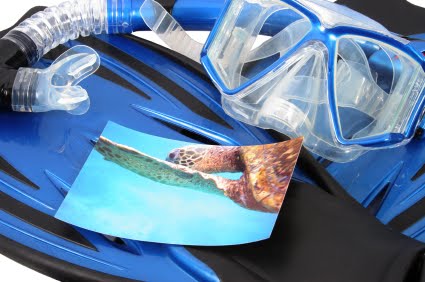
Getting Great Underwater Photos


Summer means swimming pools and ocean depths, and those fun moments can be photographed even when everyone is wet! Aquatic photography does require a bit more planning and additional equipment, but for those who venture into this form of imaging, the results are well worth the effort.

Many of the same basic photographic principles apply regardless of whether your subject is in the shallow end of a pool or immersed in the Pacific. However, different environments do require different considerations. It’s important to remember safety above all, so make sure that you have the proper training and certification, and always be aware of your environment. Shooting underwater requires learning how to work within certain constraints and limitations such as a confined space, fast moving sea life and limited light.

Consider these tips the next time you consider shooting underwater:

Hone your Diving Skills: If you’re shooting in the deep, you’ll need to be able to keep yourself stable. Buoyancy control is very important in this environment and can have a great impact on the results you achieve.

Keep it Close: You’ll want to shoot your subjects closer than normal. Try to keep the distance less than two feet if possible. The water will ‘swallow’ light and getting well-illuminated shots is far more challenging if you’re shooting from farther away. You’ll also find that color fades the deeper you dive, so this is another consideration. Your flash won’t be as effective either, so try to close the gap between you and your subject.

Enlarge Your Subject: Try shooting upward to better capture your subject. This approach makes subjects appear grander and will allow you to show greater detail as well. This is a powerful technique in aquatic photography that adds scale and dimension to underwater life.

Pool Fun Photos: Try to shoot when the sun is overhead and strong, which is usually between 10am-2pm. This allows you to use the robust light to your advantage. You can also experiment with capturing action dive shots above and below water. Try a few test runs (kids love to ‘cannonball,’ so this shouldn’t be a problem) to make sure your placement allows you to capture the best shots.

Waterproofing Options: If underwater photography is something you’d like to pursue in a regular basis, consider purchasing a waterproof camera. There are a variety of models that can operate in wet conditions without fear of damage. If you prefer to use your existing camera, there are a number of watertight camera housings that will allow you to take your camera into the deep. Stop by our store and we’ll be put together the right solution for you.

Wednesday, July 22, 2009

Rent Scenic Backgrounds.com by Westcott


Would you like to save hundreds of dollars and have your images be the talk of the town? If you answered yes, then you've found the right place. Most companies charge about $300.00 to buy one single scenic background that only gives you one look for all the images you take. No one wants their photo to look the same as their neighbors did. Would you?

For only $49.99 (or $29.99 for those of you that most likely have "the coupon code") you could rent 6-10 backgrounds for the same price you could buy just one.

For you senior portrait and fashion photographers, options of over 100 backgrounds can set you apart from your competition ~ that has been using the same bench and garden background for years. Let your client choose backgrounds ahead of time, discuss clothing, then have it shipped in for the shoot and returned within a week.

For the photo enthusiast, get creative! Holiday cards, greeting cards, birthday invitations and more. The list is endless. The amount of things you can place an image onto now is mind boggling. Blankets, mouse pads, coffee cups, clothing...give a gift that is personalized and unique.

Take a look at what Westcott has to offer!

SAVE $20!

Use Code:AM0662QZ

Monday, July 20, 2009

Looking for Shiny Happy People.


We are so fortunate that Fort Worth Camera is continuing to grow. Due to this growth, we are looking to expand our fortune to "shiny happy people" (any R.E.M. fans?) who are looking for a fast paced professional environment?  We have both part-time and full-time positions available. Retail experience is a plus; reliability and  an energetic personality is a must. What are your strengths... we want to know!

Graphics: fluent in Photoshop, iPhoto, Aperture, Lightroom, etc.
Specialty Sales: cars, jewelry, boats, homes, pharmaceuticals, etc.
Retail: Department store sales, Jack in the box, Payless, etc.
Photography Experience: My Kids only, Point and shoot only, SLR's, Studio Photography, Weddings, Freelance, etc.

How to apply: Please come in to fill out a mini-application at Fort Worth Camera , 2900 W. 6th. St, Fort Worth, TX 76107 during store hours. Bring in your resume and INCLUDE your contacts and reference. 

Saturday, July 11, 2009

In Loving Memory

David Pearson
1958-2009

Fort Worth Camera will be closing at Noon on Monday, July 13 to honor our beloved David Pearson. FWC staff will be attending memorial service.
He was a dear friend to many and forever will be missed.

Thursday, July 9, 2009

Dallas Zoo Photography Contest

Feathers Fur & Scales

 Photographs taken at the Dallas Zoo between April 1, 2009 and September 30, 2009 are eligible for competition.

Wednesday, July 8, 2009

"Pic of the Day"

Visit our new blog and participate. Share your favorite images with friends, family and the Fort Worth Camera supporting community.

Tuesday, June 9, 2009

Summer Travel

Summertime signals that adventure awaits. There are family excursions, girls’ weekend trips, father/son outings and solo journeys ahead. Now’s a good time to get your gear ready and pick up any accessories you might need to make your trip a photographic nirvana.

Whether it’s a weekend trip or a two month-trek, here are a few items you’ll need to make sure your travel bag is ready to go.

Expand Your View: There’s no better time to consider a new lens for your camera than when you’re about to embark on a new adventure. A new lens can help you see your environment in an entirely different way and help you take your photography to a higher level. Let us show you how a new lens can expand your view: http://www.promaster.com/products/lenses

Pick the Perfect Bag: The right camera bag is critical in keeping your photography gear protected and organized. Whether you’re looking for a backpack with compartments, a messenger style for hands-free access jet-setting or a waterproof model for turbulent weather conditions, it’s important to find the right fit for your travel needs. We have a variety of choices and can help you find the perfect bag to accompany you on your journeys. http://www.promaster.com/products/bags

Extra Memory Cards: It’s a safe bet that you’ll be taking tons of pictures so make sure you have enough memory cards to keep up with the entire trip. You’ll want to choose high quality digital memory cards with a high-speed transfer rate. We offer a wide selection here: http://www.promaster.com/products/memorycards

Rechargeable Batteries: Don’t get caught with a dead battery in the middle of your trip. Just tuck an extra rechargeable battery in your bag and it will help carry you through your entire trip. And don’t forget to pack the charger! Here are a few high quality batteries to consider: http://www.promaster.com/products/batteries

Travel Back-Up Method: Do you have a way to download and protect your digital pictures while you’re on the road? If you’re traveling with a laptop, consider using an online photo backup service or a portable external hard drive. Give us a call or come by the store so we can find which model would work best for your needs and budget.

Tuesday, May 12, 2009

Grand Re-Opening Sales Continue!

We invite you to come in and take advantage of all the clearance offers and great value.